Omkareshwar
One of the 12 Jyotirlingas — The Sacred Om-Shaped Island
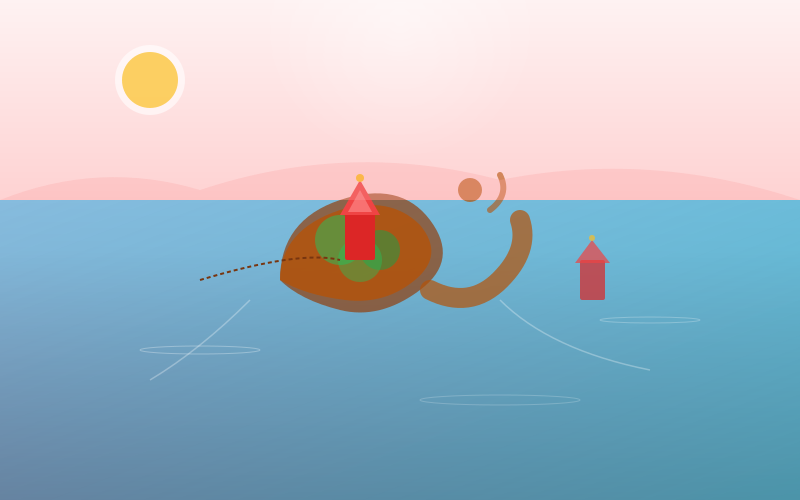 Omkareshwar
Omkareshwar is the single most important pilgrimage centre in the entire Narmada belt and one of the most sacred sites in all of India. It is home to the fourth of the twelve Jyotirlingas of Lord Shiva. The town is built on and around an island called Mandhata (or Vaidurya Mani Parvat), formed by two streams of the Narmada River, and the island's shape remarkably resembles the sacred Hindu symbol "Om" (ॐ) when viewed from above.
According to mythology, the island is named after King Mandhata of the Ikshvaku dynasty, who is said to have performed intense penance here to please Lord Shiva. Another legend describes how the Narmada River itself emerged from Lord Shiva's sweat during his cosmic Tandava dance, and her eternal devotion to Shiva led to this sacred site's creation.
The main temple, Shri Omkar Mandhata, houses the Jyotirlinga and is an architectural marvel with intricate carvings dating back centuries. The temple is open from 5:00 AM to 9:30 PM with no entry fee. Beyond the main shrine, the island holds several important temples: the 24 Avatars Temple (dating to the 10th century, featuring extraordinarily intricate carvings of Vishnu's incarnations), the Siddhanath Temple (13th century, renowned for its remarkable elephant frieze running along its base), and numerous smaller shrines and meditation caves used by sages over millennia.
On the southern bank, 1.9 km from the main temple, stands the Mamleshwar (Amareshwar) Temple — remarkably, this is considered a second Jyotirlinga, making Omkareshwar unique as the only place where two of the twelve Jyotirlingas exist in such close proximity. Some traditions count Omkareshwar and Mamleshwar as a single Jyotirlinga, while others count them separately.
The sacred parikrama (circumambulation) around the Om-shaped island is 7 km long and takes 3-4 hours on foot. The route reveals ancient temple ruins, meditation caves of sages, stunning river views, and a profound sense of spiritual history. Alternatively, devotees can complete the parikrama by boat in approximately 30 minutes, though the walking route is considered more meritorious. The parikrama begins at the Suspension Bridge and ends at the main ghat. Devotees believe completing it washes away sins and fulfills wishes.
The two streams of the Narmada — sometimes called the Narmada and Kaveri — separate before and reunite after encircling Omkar Parvat, creating the island's distinctive shape. Boat crossings between the banks cost approximately ₹50 per person from Gaumukh Ghat.
Maha Shivaratri (usually February-March) is the grandest celebration here. The temple remains open 24 hours during this festival, with the midnight puja between 12:00 AM and 12:45 AM being the most auspicious. For those seeking a less crowded experience, the early hours of 3:00-5:00 AM offer an intensely spiritual atmosphere. Massive crowds numbering in the hundreds of thousands descend upon the island during this festival.
Timings
Main Temple: 5:00 AM - 9:30 PM. No entry fee. Boat rides: 6:00 AM - 6:00 PM (~₹50/person). Parikrama: Best started early morning.
Best Time to Visit
October to March. Maha Shivaratri (Feb/March) for the grand celebration. Avoid monsoon when river floods the lower ghats.
How to Reach
From Khargone: 75 km (2 hours by road). From Indore: 77 km (2 hours). Nearest railway station: Omkareshwar Road (12 km). Well-connected by road with regular buses.